|
 |
The New Rules of Content Marketing for 2026
An updated guide for people trying to make great content inside the corporate machine.
|

| |||||||||||||||


Happy New Year, storytellers. In case you missed it amidst the world turning into some f—ed up game of Risk, my second book—Super Skill: Why Storytelling Is the Superpower of the AI Age—is now available for pre-order! It’s already an Amazon #1 New Release, and I’m so grateful to everyone who ordered so far. I’m giving away TONS of bonuses to people who get it early: bonus chapters, a storytelling course, SOCKS, signed books, workshops, and more.
The response amongst early readers has been incredible. As Angelique Bellmer-Krembs, f. CMO at PepsiCo, put it:
“Joe Lazer proves what AI can’t touch: the wacky, human art of storytelling that makes you irreplaceable. Super Skill is part neuroscience deep-dive, part creative insurgency manual, and somehow the funniest book about writing you’ll ever read. If you make things for a living, this is your new bible. If you don’t, read it anyway. Even the footnotes slap.”
Now onto this week’s newsletter:
Last January, I published The New Rules of Content Marketing (inspired by One Useful Thing’s The New Rules of Media). It was one of my most-shared pieces of the year and drove hundreds of new subscribers to this newsletter.
Looking back, those rules held up well! But holy hell, so much crazy shit has happened since then. Google tanked organic search traffic. Sam Altman decided to do Mountainhead in real life. Every social platform—even LinkedIn!—updated its algorithm. And while writing my new book, I spoke with dozens of smart CMOs, creators, and content leaders who sharpened my perspective. I got an itch—I needed to update these rules for 2026.
This one is for all of you trying to tell great stories inside the corporate machine. To kick off the new year, I give you: The New Rules of Content Marketing for 2026.
 |
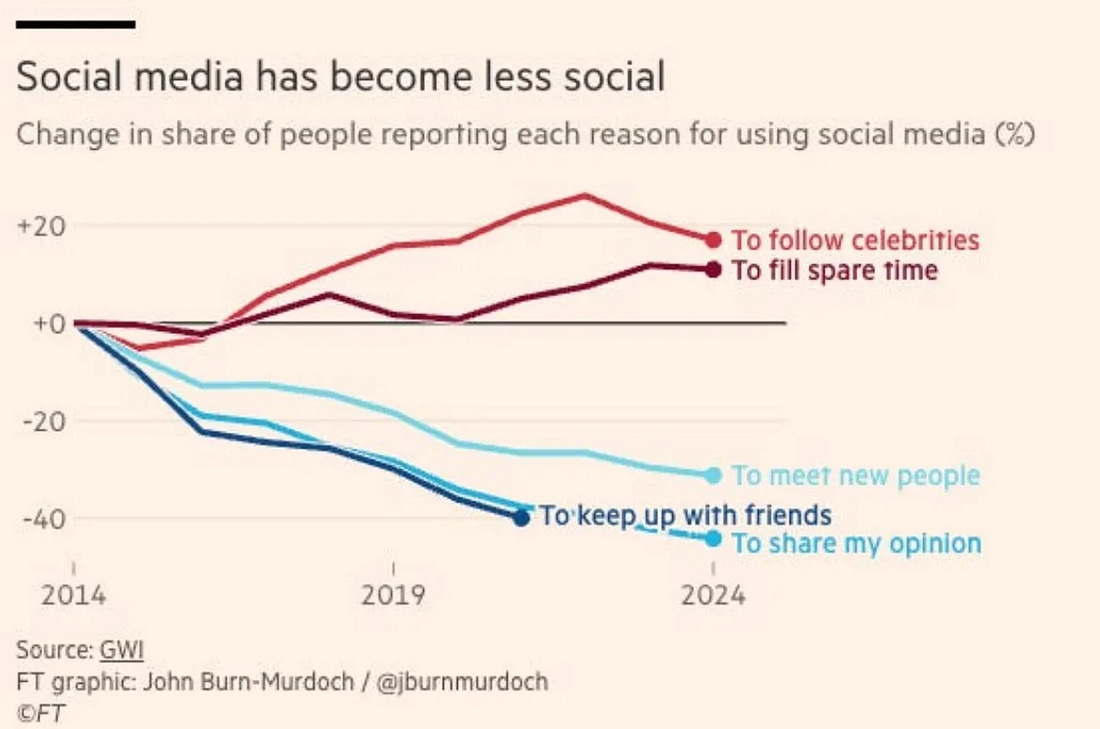
1) Content is parasocial. People want to follow people, not brands, and the algorithms know this. When was the last time you engaged with a post from a brand? When was the last time you even saw one, unless it was sponsored? The only way to reach people effectively is through internal and external influencers your audience trusts.
2) “Not sounding like AI is a linguistic superpower.” I’m quoting Sparktoro CEO RandFishkin here, and he’s right. Want to stand out? Want people to like you and trust you? Then let your freak flag fly. Use crazy metaphors. Go on anxiety-ridden diatribes inspired by your overbearing mother. Be vulnerable. Say some shit that ChatGPT and Claude would never. AI is trained to sound like the lovechild of a LinkedIn thought leader and a McKinsey slide deck. Your superpower is that you sound like you.
3) Creator teams beat content teams. If you’re running content, your job used to be developing a roster of writers and video editors; now, your job is to develop a roster of creators/influencers your audience trusts. The best ones already work at your company. If your target audience is marketers, tap your CMO and other marketers on your team. If your target audience is engineers, those people should be engineers. If your audience is cheese lovers, then tap your cheese-loving employees, like this small shop that did 300 million views on TikTok in 2025. The founder / CEO always works, too, if they’ve got a little bit of rizz. Great examples: Fishkin at Sparktoro, May Habib at Writer, Noah Greenberg at Stacker.
4) Whenever possible, you should be one of those creators. Audience is power. You’ll have much more leverage in your career if you build a high-value audience that you personally own. It increases your value and visibility in the job market and makes it so much easier to start your own thing. This is true no matter your role. I don’t care if you’re the accountant. Excel porn does SHOCKINGLY well on TikTok.
 |
5) The easiest way to get support and budget for your content program is to turn your CEO into a star on LinkedIn. It’s also the greatest cheat code for building trust in your brand. To get started, frame it as a three-month experiment. If they’re hesitant, neg them by showing them other CEOs who are crushing the content game. You’ll cast a potent spell that taps into their competitiveness AND their insecurity. They’ll stop thinking about content as “fluffy brand stuff” and start thinking about it as a “strategic priority.”
6) Every piece of content should also be a video. As Derek Thompson wrote a few months ago, social media is now television. On Instagram, people spend 93% of their time watching videos made by strangers. Video podcasts are growing 20 times faster than audio-only podcasts. If your goal is to reach as many people as possible with your stories and ideas, you need to embrace video.
 |
7) You need to be the one to make that video. No, you’re not too old to start. Gen-Z isn’t the only generation with a movie studio in their phones. Video deepens the parasocial relationship. Creating in new mediums will keep you young. It’s like having a blood boy for your content brain.
 |
8) Make something only you can create. I’m paraphrasing Instagram Head of Marketing Adam Mosseri here, and he’s right. AI video is improving at a terrifying rate, demolishing objective reality. AI slop is everywhere. People will flock to creators who are undeniably original. Tell stories that only YOU can tell because they happened to you. Own an idea. Obsess over your voice; sharpen it relentlessly. Become a lighthouse in a sea of AI slop, and people will flock to you.
9) The hook matters more than you think. As Cameron Gidari, VP of Social Media and Innovation at Major League Baseball, put it: People don’t have short attention spans. They have short consideration spans. You need to generate curiosity or tension within the first two seconds of everything you create.
10) You’re not selling your soul by caring about things like hooks. Writers have been obsessing over their hooks for millennia. Just consider the opening line to George Orwell’s 1984: “It was a bright cold day in April, and the clocks were striking thirteen.” Holy crap. That’s the greatest “curiosity gap” hook ever written. Your thumbnails, headlines, and text overlays are all extensions of the hook. Obsess over them, too.
11) Passion matters. You have to be genuinely interested in whatever you’re creating content about. People can tell when you’re mailing it in—it’s like when you get set up on a blind date and two minutes in, you’re like, “Oh no, she’s just here because our Jewish moms play pickleball together.” If you don’t want to be there, no one else will either. If you’re bored by what your company does, get out. It’s not worth it.
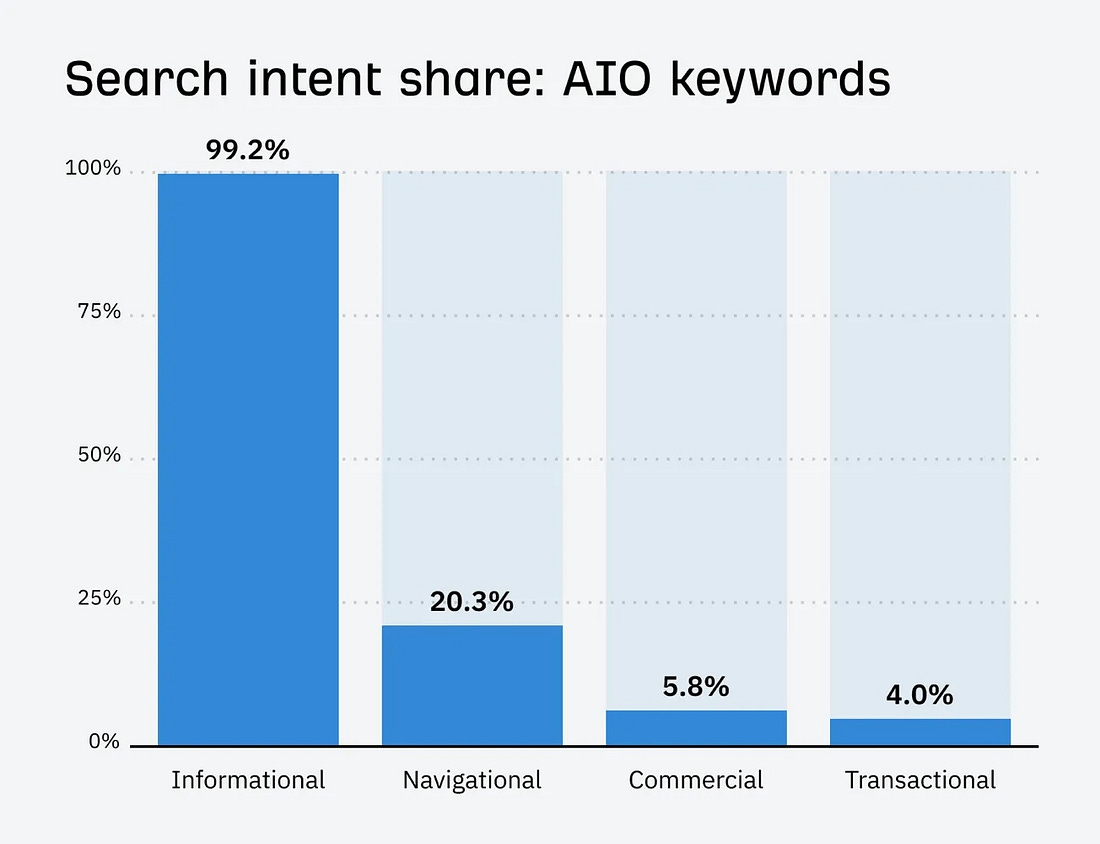
12) The old SEO playbook is dead, thank god. For two decades, marketers have been obsessed with creating generic blog posts like “What is Content Marketing?” in hopes of driving cheap traffic that rarely converts. But now, 99.2% of informational Google searches return an AI Overview, which means that creating generic informational content is pointless; it won’t drive clicks.
 |
13) No one wants to download your e-book. No piece of content is worth the price of being harassed by a desperate 22-year-old SDR terrified that their manager will replace them with AI if they don’t hit their inbound lead quota. You’re self-sabotaging by putting your best content behind a form.
14) Invest in unique IP. If you’re creating B2B/business content, that means a powerful, big idea that you can come at again and again and attack from different angles. (For me, it’s that storytelling is the super skill of the AI Age). It should help your audience see the world in a new way, and promise to transform their lives for the better.
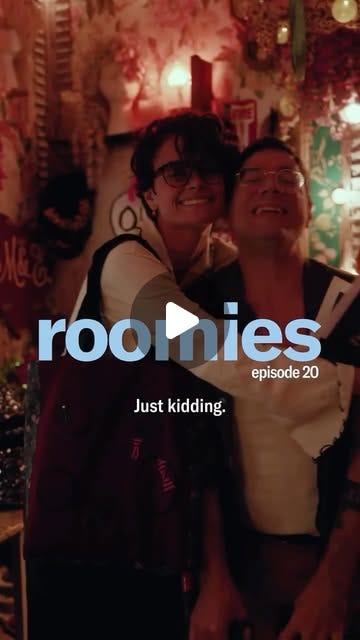
15) If you’re B2C, create episodic content. Brands are winning with premium, bite-sized TV shows that play out in the feed. See Bilt’s Roomies, jewelry brand Alexis Bittar’s The Bittarverse, and Bratz’s Always Bratz Instagram series for inspiration. Investing in unique, durable IP that keeps your audience coming back.
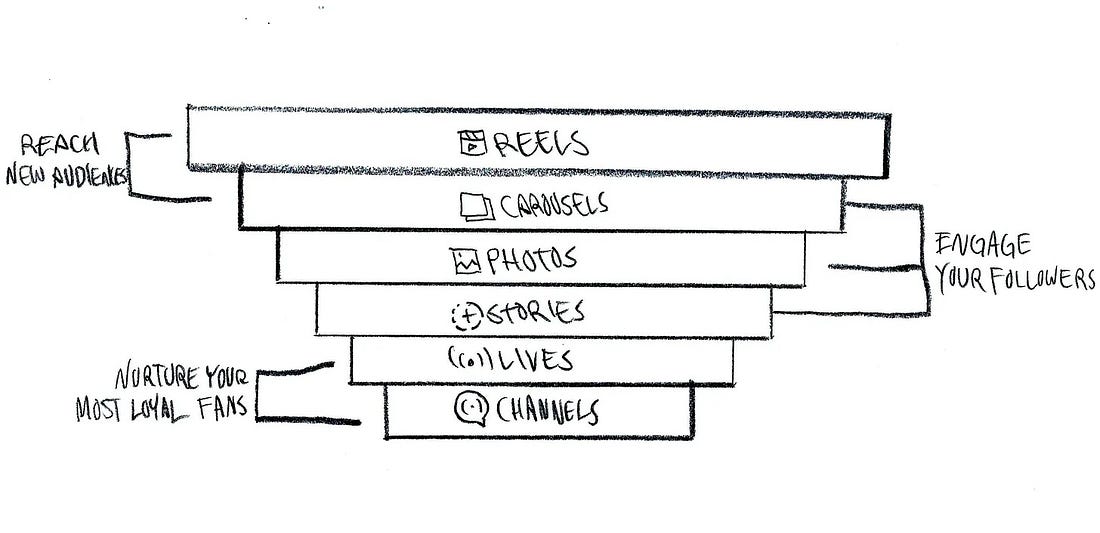
16) Think of social like a funnel. I loved this framework that Instagram shared with Rachel Karten. Some content types, such as Reels and Carousels, are designed to reach new audiences who don’t yet follow you—Reels literally has its own separate algorithm. Other content types—like Stories and Instagram Live—are designed to connect with your most loyal fans. Frame your social strategy like this, and your CFO will stop giving you shit for expensing a camera stand.
 |
17) Focus. People will tell you to “be everywhere on social!” but 99% of the time, the result is a trail of thin content that makes your brand look like it’s run by an 80-year-old with access to the free version of ChatGPT. Unless you have a massive team, focus on being great at a few channels where your audience spends most of their time and nurture them with the right content mix.
18) One of those channels better be email because email will never die, and the social platforms will betray you. It’s only a matter of time. Don’t rent, own. Constantly give your followers a reason to subscribe to email-based platforms like Substack by offering exclusive content and access they can’t get on social.
19) Automate the BS. Most knowledge work is a soul-sucking time pit. Persona documents. Decks. Landing page copy. Internal presentations. Email nurtures. List cleaning. Claude and ChatGPT can do most of that at a B+ level. Reinvest that time by telling great stories that your audience loves and gives you pride.
20) Always ask yourself: Would I read this? No one wants to read your event recap blog post. No one is clicking on “5 Takeaways From Our CFO Roundtable.” I’d rather force myself to hate-listen to Ben Shapiro. Seventy-five percent of the content that brands create is useless and created out of habit. Just cut that shit out and spend that time making something meaningful.
21) You’re more valuable than ever. It may not feel like it, but corporate marketing teams and social platforms are suffocating themselves with AI slop, and the backlash has just begun. Audiences will seek curated content from people they trust. People with great taste and storytelling skills are quickly seeing their value skyrocket. Job titles that ask for storytellers DOUBLED in 2025. Storytellers are back.
If you liked this post, you’ll also like:
Recommended
Substack Entrapment Theory (Julia Alexander / Puck News): Publishers are flocking to Substack, but what happens when they can’t take their paying customers with them?
What We Can Know (Ian McEwan): I can’t stop thinking about McEwan’s latest novel—a sci-fi murder mystery meets a treasure hunt that’s a beautiful exploration of the human condition. Treat yourself to some good fiction to start the year.
Don’t Have a Great Day. Make One. (Shane Snow / The Snow Report): One of my favorite narrative non-fiction business books is Dream Teams by my friend Shane Snow. He regained the rights to it, and now he’s giving it away chapter by chapter on his Substack for free.
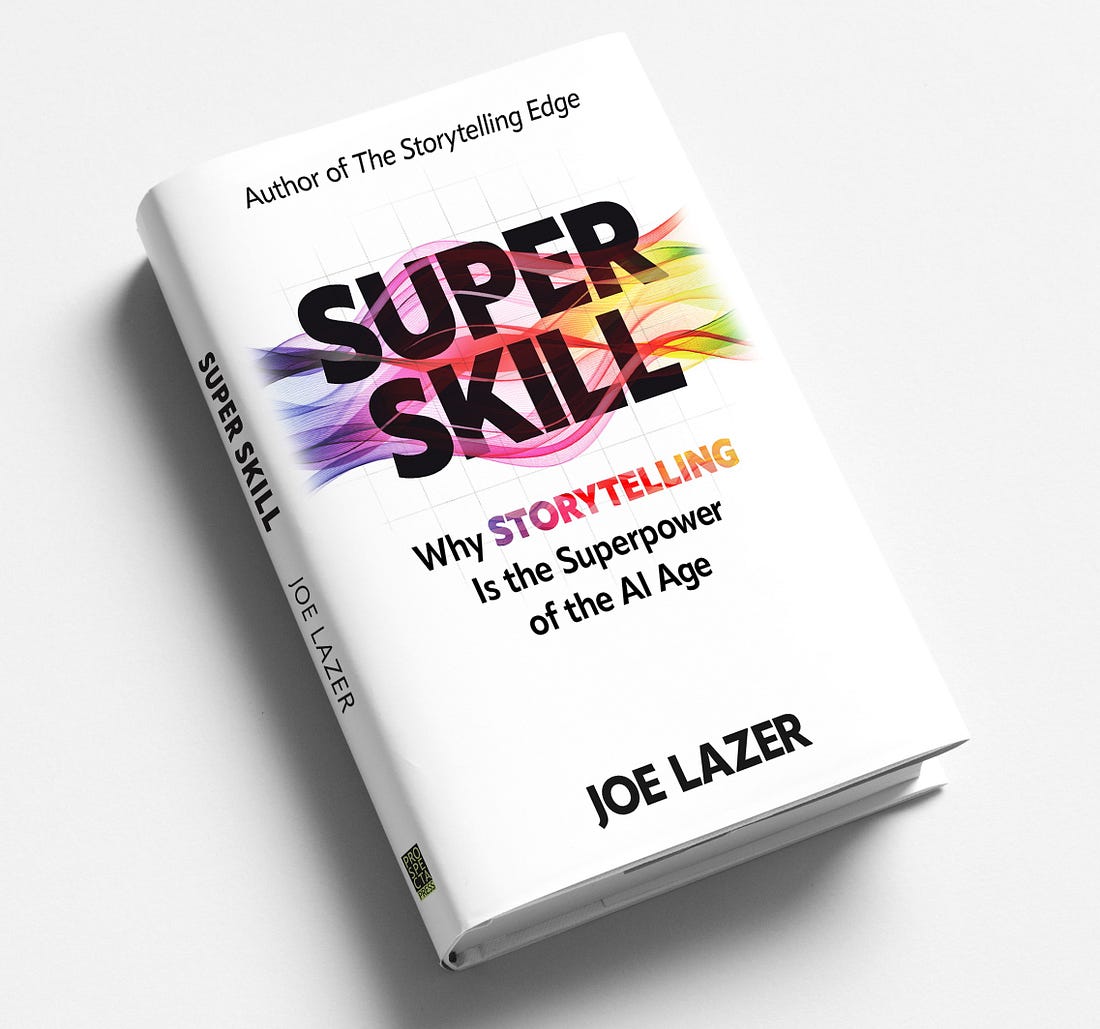
I’m the best-selling author of The Storytelling Edge and the upcoming book Super Skill: Why Storytelling Is the Superpower of the AI Age. Subscribe to this newsletter for fresh storytelling and audience-building strategies in your inbox each week, and pre-order your copy of Super Skill to unlock bonus chapters and free access to my upcoming storytelling course.
 |
The Storytelling Edge is free today. But if you enjoyed this post, you can tell The Storytelling Edge that their writing is valuable by pledging a future subscription. You won't be charged unless they enable payments.
| ||||||||||
| ||||||||||

